
At its heart, a vision board is a powerful, physical collection of images, words, and quotes that spell out your biggest goals and dreams. Think of it as a strategic focusing tool—it takes those abstract ambitions floating around in your head and puts them right where you can see them every day.
What Exactly Is a Vision Board
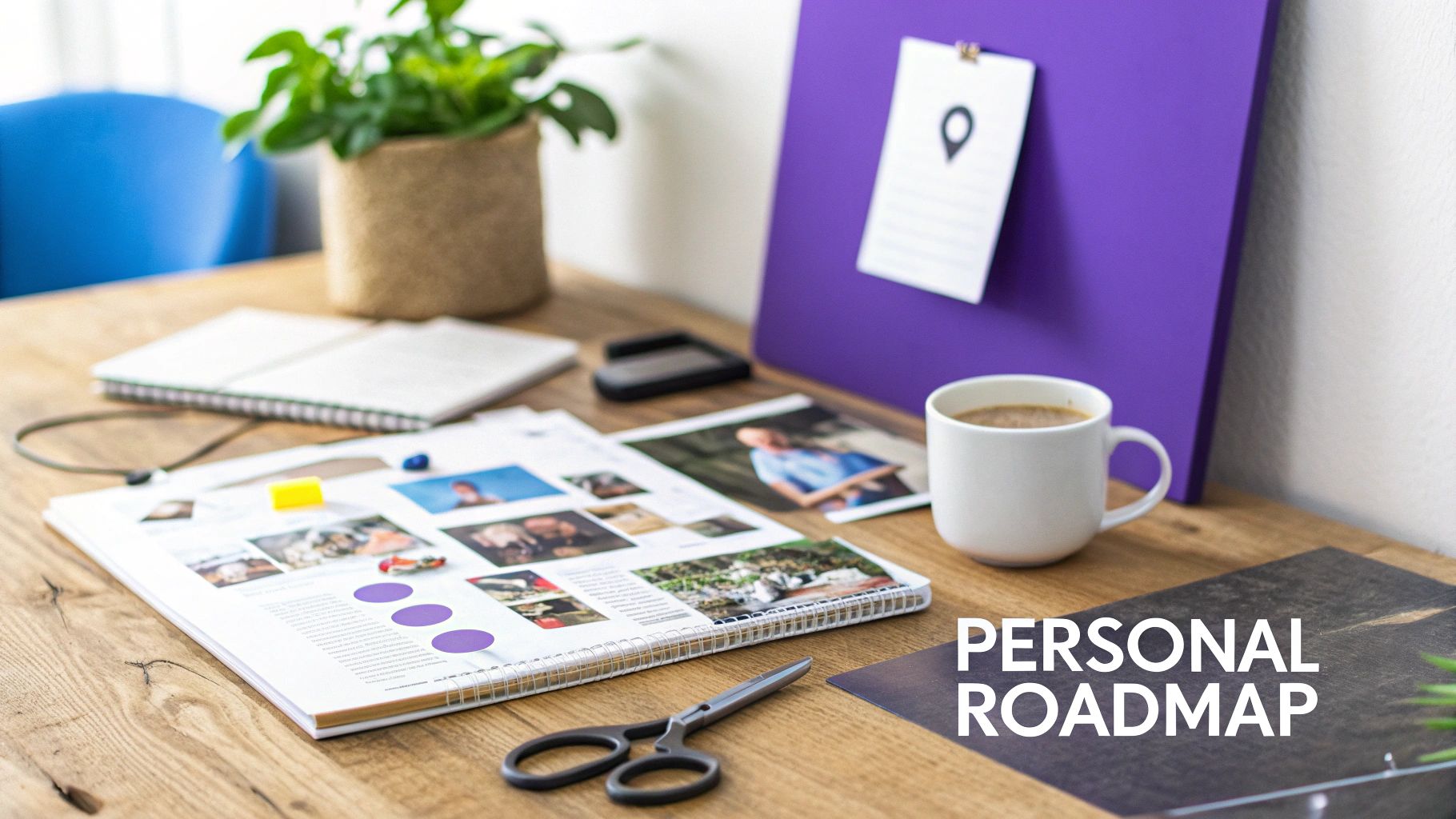
Let's look past a simple definition of a vision board. It's less of a magic wand and more of a personal roadmap for your future. The whole point is to have a constant visual reminder of what you’re working toward, helping you turn vague hopes into clear, actionable priorities.
This isn't just about making a pretty collage. The process itself—whether you’re cutting out pictures or dragging and dropping images digitally—forces you to engage with your goals on a much deeper, more emotional level. By choosing and arranging things that truly resonate with you, you’re solidifying your intentions and making them feel real and within reach.
The Psychology Behind It
A vision board’s effectiveness isn’t magic; it’s rooted in some pretty powerful psychological principles that help drive focus and motivation. It works by priming your brain to spot opportunities related to your goals. This ties into the brain's natural filtering system, known as the Reticular Activating System (RAS).
When you constantly expose yourself to images of your desired outcomes, you’re essentially training your subconscious to scout for the resources, people, and chances that will help you get there. This isn’t just wishful thinking—it’s targeted visualization in action.
A vision board is a tool to keep what you're working toward front and center so you stay focused, connected, and grounded in your values. It transforms abstract desires into tangible reminders that guide your daily actions.
More Than Just Personal Goals
While most people think of vision boards for personal growth, they're incredibly useful for teams and businesses, too. In a remote work environment, a shared vision board can be an amazing tool for alignment. It brings a scattered group together around a collective mission, making sure everyone is pulling in the same direction.
A team vision board answers the all-important "why" behind a project. Before anyone gets bogged down in tasks and deadlines, it builds a shared sense of purpose. This visual anchor is crucial for the creative process and sets the stage for more structured work. To see how this fits into the bigger picture, you can learn more about the early creative stages in our guide on the definition of ideation. When everyone shares the same visual clarity, brainstorming sessions become far more focused and effective.
The Science Behind Why Vision Boards Work
A vision board is so much more than just a fun craft project or a pretty collage of things you like. It's a powerful tool grounded in how our brains actually work, and it's designed to prime your mind for success. The magic isn't in the glue and paper; it's in the way a vision board helps shape your focus, drive, and even what you notice in the world around you.
At its heart, the process is all about visualization. Think about elite athletes. They don't just practice physically; they mentally rehearse a flawless race or a perfect shot over and over. Doing this activates the exact same neural pathways in their brains as if they were actually competing. A vision board does the same thing for your goals—every time you look at it, you're getting in a mental rep.
Your brain starts building and reinforcing the neural connections tied to those goals, making them feel less like distant dreams and more like an inevitable reality.
Activating Your Brain's Attention Filter
One of the coolest parts of our brain involved here is the Reticular Activating System (RAS). It’s a bundle of nerves that acts like a bouncer for your mind, filtering the endless stream of information coming at you every day and deciding what gets your attention.
Ever learned a new, obscure word and then suddenly you start seeing and hearing it everywhere? That’s your RAS in action. You’ve told it that this word is now important, so it starts pointing it out.
A vision board trains your RAS to do the same thing for your ambitions. By consistently looking at images that represent what you want to achieve, you’re programming your brain's filter to actively hunt for opportunities, people, and resources that match that vision. You start to notice things that were probably there all along but just blended into the background before.
By visually defining your goals, you are giving your brain a clear set of instructions. You’re telling your subconscious mind what is important, empowering it to work behind the scenes to help you recognize and seize relevant opportunities.
The Psychological Fuel for Action
But just noticing opportunities isn't enough; you have to act on them. This is where the emotional punch of a vision board comes in. Seeing tangible pictures of your goals sparks an emotional response, which is a massive motivator for us humans. This idea ties directly into the principles of positive psychology, which shows that focusing on positive outcomes and our strengths is what truly fuels our growth.
This emotional connection builds deep-seated motivation and reinforces the belief that you can actually achieve these things. It turns vague wishes into concrete, daily reminders of what you're working so hard for, closing that crucial gap between simply wanting something and taking action to get it.
This constant psychological boost is what keeps you going, especially when things get tough. A well-made vision board becomes a practical, science-backed tool for focusing your mind and driving you forward. To dig deeper into how our brains generate these kinds of breakthrough ideas, check out our guide on what is divergent thinking in psychology.
Choosing Your Canvas: Physical vs. Digital Vision Boards
Alright, you've got your goals in mind. Now, where do you put them? The choice between a classic, physical vision board and a modern, digital one isn't just about aesthetics; it completely changes how you'll engage with your aspirations day-to-day.
Let's break down which one might be the right fit for you.
The Power of a Physical Board
There's something uniquely powerful about a physical vision board. Think of it as a hands-on art project for your future. The simple act of cutting out images, feeling the texture of the paper, and pinning quotes onto a real corkboard creates a surprisingly strong connection to your goals.
This tactile process helps burn your intentions into your memory in a way that just clicking and dragging can't quite replicate. It becomes a permanent, tangible fixture in your space—on your office wall or beside your bed. You can’t just close the tab on it.
The real magic of a physical board is its constant presence. It occupies physical space in your daily life, making sure your goals are always in your line of sight, whether you're consciously looking at them or not.
This constant, visual nudge is fantastic for keeping your ambitions front and center.
Embracing the Digital Advantage
Digital vision boards have taken off for a reason, especially in our hyper-connected world. They offer a kind of flexibility and collaborative energy that a physical board just can't match.
For one, your vision is always with you—on your phone, tablet, or laptop. No more waiting until you get home to reconnect with your goals. For teams, especially remote ones, this is a game-changer. A shared digital board becomes a living, breathing hub for collective inspiration that everyone can see and contribute to, no matter where they are.
- Collaboration is a breeze: Team members can add images, key metrics, and motivational quotes in real-time, building a shared vision together.
- Updates are instant: As goals evolve or are achieved, a digital board can be tweaked in seconds. This keeps it relevant and dynamic.
- The entire internet is your resource: You have a limitless library of images, GIFs, videos, and articles to pull from.
For distributed teams, finding the right digital canvas is everything. If you're looking for a platform to get your team on the same page, our guide on Google Jamboard alternatives can point you toward some great collaborative tools. A shared board creates a powerful visual language that aligns everyone on the big picture before you get lost in the weeds of project tasks.
Comparing Physical and Digital Vision Boards
So, which path should you take? Neither is inherently better—it all comes down to your personal style, your goals, and whether you're working alone or with a team. This table breaks down the core differences to help you decide.
| Feature | Physical Vision Board | Digital Vision Board |
|---|---|---|
| Creation Process | Tactile and hands-on. Involves cutting, pasting, and arranging physical items. | Quick and easy. Involves dragging and dropping digital images, text, and videos. |
| Accessibility | Limited to its physical location. You have to be in the same room to see it. | Accessible anywhere, anytime, from any device with an internet connection. |
| Collaboration | Difficult for teams, especially if they aren't in the same physical space. Best for individual use. | Ideal for team collaboration. Multiple users can contribute and edit in real-time. |
| Flexibility | Static. Making updates or changes can be cumbersome and messy. | Highly dynamic. Easy to update, rearrange, and modify as goals evolve. |
| Resources | Limited to what you can find in magazines, printouts, and physical objects. | Virtually unlimited. You can pull images, videos, and inspiration from the entire internet. |
| Best For… | Individuals who value a hands-on, sensory experience and want a constant physical reminder in their personal space. | Remote teams, individuals with evolving goals, and anyone who wants their vision board to be portable and shareable. |
Ultimately, the best tool is the one you’ll actually use. A physical board can be a beautiful, grounding presence, while a digital board offers unmatched convenience and collaborative power. Choose the canvas that gets you most excited to start building your future.
How to Create an Effective Vision Board
Putting together a great vision board is more than just a fun arts-and-crafts session. It's a thoughtful process of looking inward and defining what you really want. When done right, your board becomes a daily, visual reminder—a kind of contract with yourself that turns fuzzy dreams into clear targets.
We can break the whole process down into four simple phases. Each one builds on the last, making sure your final creation is a genuinely powerful motivator. And it all starts not with pictures, but with a bit of quiet reflection.
Phase 1: Reflect and Clarify
Before you even think about grabbing a magazine or opening a new browser tab, the most important step is to figure out your "why." This is all about getting crystal clear on what you want to achieve and, even more importantly, how you want to feel when you get there. Just sticking pictures of fancy cars or big houses on a board often creates a connection that's only skin deep.
Instead, ask yourself some bigger questions:
- What feelings do I want to have every day? (Think peace, energy, or confidence.)
- What personal strengths do I want to build on? (Maybe leadership, creativity, or discipline.)
- What does my perfect day look like, from the moment I wake up to when I go to sleep?
This kind of thinking helps you get past surface-level wants and connect with what truly matters to you. It’s a lot like the foundational work you do when you create a mind map, where the central idea has to be solid before you can branch out. Your answers here will guide every single image and word you choose later on.
Phase 2: Gather Your Inspiration
Once you have your goals clearly defined, it’s time for the fun part: collecting your materials. Think of yourself as a curator for your future life. The goal here is to gather a wide range of things that give you an instant gut reaction of "Yes, that's it!"
Your collection might include:
- Images: Look for photos that capture the feeling of your goal, not just the end result. Instead of a picture of a marathon finish line, maybe it's a shot of a runner looking strong and happy mid-stride.
- Words and Quotes: Find powerful affirmations, single words that jump out at you, or quotes that feel like your personal motto.
- Symbols: These could be logos of companies you admire, symbols representing personal growth, or anything that has a special meaning just for you.
Don't overthink this part. If something speaks to you, grab it. You can always narrow down your collection later. For remote teams, a shared digital folder can become a collaborative treasure chest of inspiration.
This infographic breaks down the main decisions you'll make in the creative process.
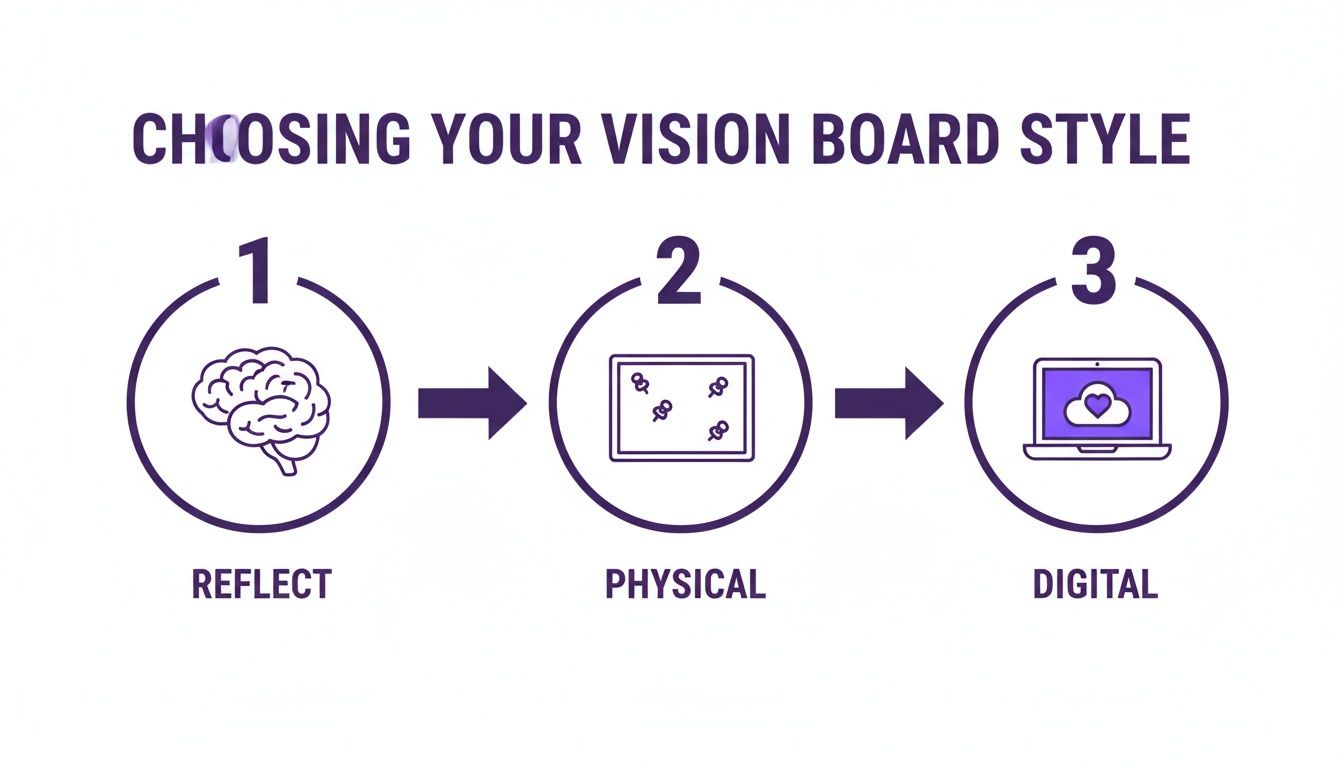
As you can see, whether you end up with a physical or digital board, that initial reflection is non-negotiable.
Phase 3: Design Your Vision
Now it’s time to bring it all together. Start arranging your collected items on whatever you’ve chosen as your canvas, whether it's a corkboard or a digital tool. The idea isn't just to make it pretty; it's to create a visual story that makes sense to you.
Try organizing your board into sections that reflect your life, like career, well-being, relationships, and finances. This structure helps avoid a jumbled mess and lets you focus on specific areas. As you place each piece, think about how it relates to the others to build a cohesive narrative of the future you’re working toward.
Phase 4: Activate Your Board
This is the final—and most important—step. A vision board that’s tucked away in a closet has exactly zero power.
Your vision board is a tool, not a contract. Its purpose is to keep your goals visible and aligned with your daily actions. If it no longer feels right mid-year, give yourself permission to start fresh.
Put your board somewhere you’ll see it every single day. Maybe that's next to your desk, on your bedroom wall, or even as your computer's wallpaper. Take a moment each morning to look at it and really connect with the feelings it brings up. This daily ritual is what primes your brain to spot opportunities and keeps you fired up for the journey ahead.
Elements of a Truly Inspiring Vision Board
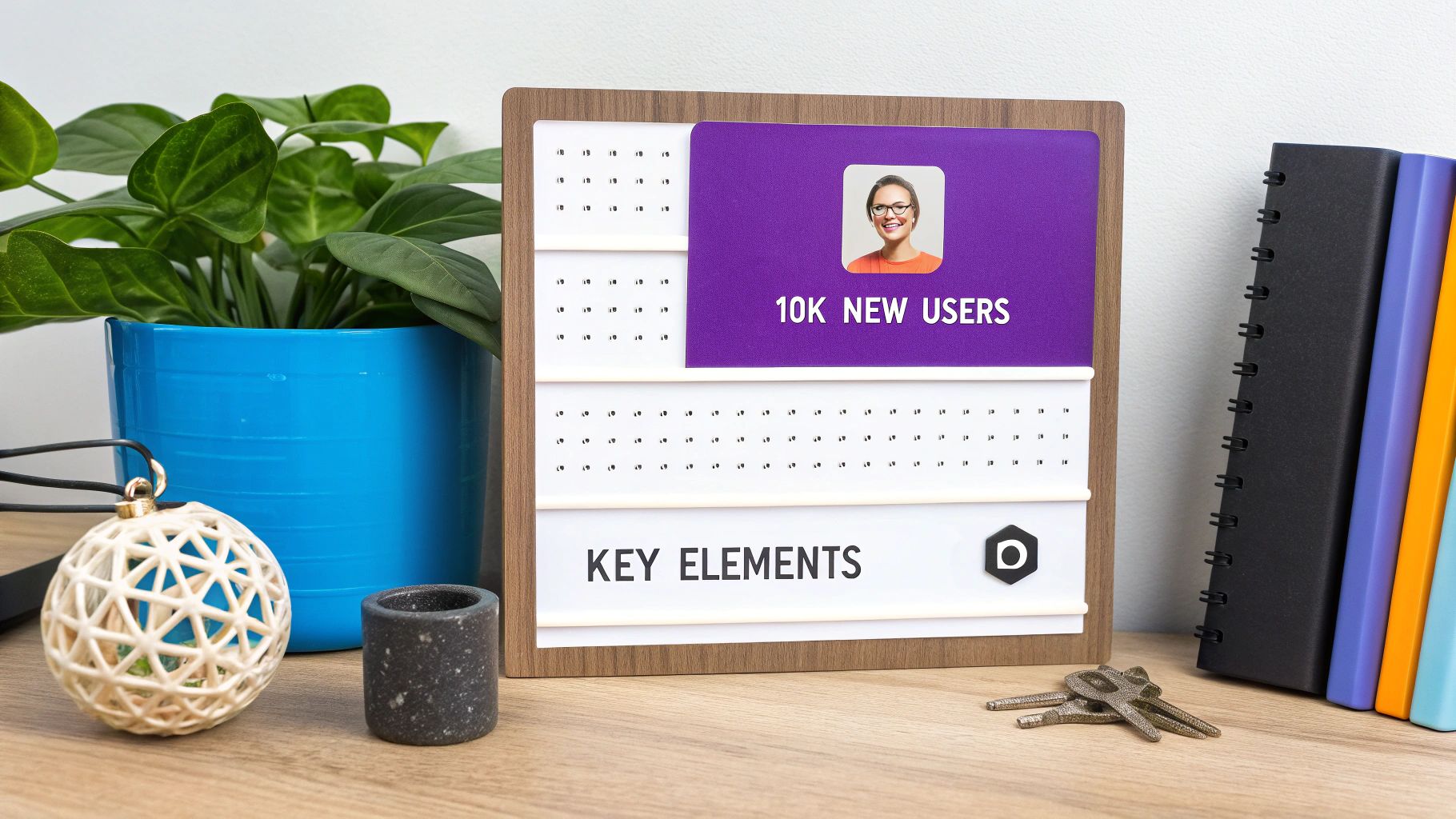
A great vision board isn't just a random collage of pretty pictures. It’s a deliberate, curated gallery of your future. Every single element should have a purpose and speak directly to what you're trying to achieve. The best ones mix different kinds of content to tell a rich, layered story.
Think of it like building a winning team. You need players with different skills to succeed, right? Your board is the same. It needs a blend of inspiring images, hard numbers, and personal touches to really work. That combination is what keeps you motivated on both an emotional and a logical level.
Core Components for Any Goal
No matter if you're mapping out personal growth or your startup’s next big launch, a few key elements are always foundational. These are the pieces that turn the abstract definition of a vision board into a practical tool you’ll actually use for daily motivation.
A truly effective board might include:
- Emotional Imagery: Photos and graphics that capture the feeling of success. Instead of just a picture of money, find an image of someone living the life that money would provide.
- Actionable Affirmations: Positive statements written in the present tense that cement your goals. Things like, "I am a confident leader" or "Our team consistently crushes its targets" are incredibly powerful.
- Specific Metrics: Real, hard numbers that define what success actually looks like. For a business, this might be "10,000 new users" or hitting "$500K in quarterly revenue."
- Inspirational Quotes: Words from leaders or thinkers you look up to. These act as little reminders of the mindset you need to adopt to get where you're going.
One great way to keep your vision top-of-mind is by turning it into your environment. You can see how inspiring quotes for walls stickers can transform your space and reinforce your goals every day.
The most powerful vision boards connect your big-picture dreams to tangible, everyday actions. They don't just show the destination; they also hint at the journey, making your goals feel both exciting and achievable.
Tailoring Your Board to the Objective
The real magic of a vision board is in the customization. A product team’s board should look totally different from an individual’s career plan, and that’s the point. The key is to pick elements that are hyper-relevant to your specific goal so that every piece on the board is pulling its weight.
For example, a team launching a new app might feature an image of their ideal user persona, some key UI mockups, and the logos of competitors they plan to beat. An individual’s career board, on the other hand, might have images that represent work-life balance, the logo of a dream company, and a list of skills they want to learn. This targeted approach is what turns a board from a simple collage into a focused guide for action.
How Teams Can Use a Collaborative Vision Board
Vision boards are usually thought of as a personal tool, but their real power is unlocked when a whole team gets involved. For remote and hybrid teams, a shared vision board is more than a fun exercise—it’s a way to pull everyone’s focus together into a single, unified mission. Think of it as a visual anchor that keeps the entire crew rowing in the same direction.
This kind of shared visual language hits differently than a dense document or a complicated spreadsheet. It instantly answers the big "why" behind a project, creating a genuine sense of purpose before anyone gets bogged down in the "how." It’s your team's North Star, making sure everyone knows exactly where you're all headed.
Facilitating a Team Vision Board Session
Getting a team to create a vision board together isn't just a free-for-all. It needs a bit of structure to make sure every voice is heard and the final board truly represents the team's collective ambition. The whole point is to blend big-picture dreaming with down-to-earth alignment.
Here’s a simple way to run a session:
- Prep Work: Before you meet, ask everyone to spend a little time thinking about what success looks like for the project or quarter. This way, people show up with ideas ready to go.
- Build It Live: Jump on a digital whiteboard or use one of the many great collaboration tools for remote teams to build the board in real-time. Have one person act as a facilitator to steer the conversation and place the visual pieces as they come in.
- Find the Themes: As everyone adds images, words, and key metrics, start looking for patterns. Group similar ideas together to build a clear story about where the team is going.
This approach makes sure the board is a genuine team effort, not just one person's idea of the future.
A team vision board acts as a strategic filter. When new ideas or opportunities arise, the team can hold them up against the board and ask, "Does this move us closer to our shared vision?"
And this isn't just feel-good stuff; there's data to back it up. One study found that small business owners who used vision boards were nearly twice as likely to hit their targets. A whopping 82% of them reported they accomplished more than half the goals they put on their board. That shows just how powerful a shared visual plan can be for any team. You can dig into more numbers on vision board statistics and success rates.
Bridging Vision to Actionable Ideas
Once the collaborative vision board is in place, it sets the perfect stage for the next step: brainstorming. It gives the team the clarity and motivation they need before jumping into a more structured tool like Bulby to generate concrete ideas and action plans.
When you start with a clear, shared picture of the destination, the brainstorming that follows is naturally more focused and creative. Everyone is already aligned on the big-picture mission, which makes the whole innovation process run a lot smoother.
Got Questions About Vision Boards? Let's Get Them Answered
Even after you get the basic idea of a vision board, a few practical questions almost always pop up. Getting these sorted out is key to moving from just making a board to actually using it as a powerful tool for focus and growth.
Let's dive into some of the most common questions. Think of this as your FAQ for making sure your vision board really works for you, right from the get-go.
How Often Should I Update My Vision Board?
There’s no magic number here, but a good rule of thumb is to check in with your vision board every quarter. Your board should be a living, breathing thing that grows with you—not a static piece of art you hang on the wall and forget.
When you hit a goal or feel your priorities shifting, that's your cue to make an update. For teams, this is even more critical. Revisiting the board at the start of a new project or quarter is a fantastic way to get everyone re-energized and pointing in the same direction.
The biggest mistake people make is creating a board and then tucking it away. Its power comes from daily engagement. Put it somewhere you’ll see it every day, and take just a moment to really connect with what’s on there.
Another common pitfall is being too vague. Don't just stick a picture of a car on your board; find the exact make and model. The more specific and emotionally resonant your images and words are, the better they'll work to prime your brain for success.
Can Vision Boards Work for Short-Term Projects?
Absolutely. We often think of vision boards for big, long-term life goals, but they are incredibly useful for shorter, more specific projects. A project-based board can be a game-changer for keeping a team unified on the "why" behind a product launch or visualizing what a successful marketing campaign looks like.
Imagine a board for a three-month software sprint. It might include things like:
- Mockups of the key features you're building.
- The target number for user adoption.
- A few quotes from positive beta-tester feedback.
This gives the team a constant, visual reminder of what they’re working toward and why it matters, which is a huge boost for morale and focus.
Ready to turn your team's shared vision into actionable ideas? Bulby provides a structured, AI-guided brainstorming process that picks up right where your vision board leaves off. Start your first session and transform inspiration into innovation by visiting https://www.bulby.com.